

Imagine standing at a place where a 12th-century stone fortress casts its shadow over a skyscraper sheathed in 10,000 LED flames. Where UNESCO-listed cobblestones give way to Chanel boutiques. Where the world’s largest landlocked sea glimmers at the foot of a palm-lined promenade. That city is Baku — and it may just be the most surprising capital you’ve never visited.
Straddling the ancient crossroads of Europe and Asia, Azerbaijan’s capital is having its moment in 2026. Flight routes are expanding, boutique hotels are opening inside medieval caravanserais, and travellers who once skipped the South Caucasus are now putting Baku at the top of their lists. The question everyone is asking: what are the best things to do in Baku?
Here are 10 unmissable experiences — plus one that most visitors overlook and never forget.
Before You Go: Quick Essentials
e-Visa: Most nationalities need one. Apply online — it takes 3 business days and costs around $26 USD.
Flights: Baku (GYD) has direct connections from Istanbul, Dubai, Frankfurt, Vienna, London, Moscow, and more.
Hotels: From the Four Seasons to intimate Old City guesthouses — there’s something for every budget.
How long to visit: 3 full days covers the city highlights comfortably. Add 2 more for Gobustan, Sheki, or a slow morning on the Caspian.
Why Baku in 2026?
Baku rewards the curious. It’s a city that never quite fits the categories you try to put it in — too Eastern for Europe, too cosmopolitan for the Middle East, too modern for its ancient bones, too old-souled for its gleaming skyline. That tension is exactly what makes it fascinating.
Visitors consistently describe Baku as the love child of Paris and Dubai. The French boulevards and ornate 19th-century mansions built during the first oil boom brush up against flame-shaped skyscrapers, an undulating white cultural centre by Zaha Hadid, and the salt wind of a landlocked sea. It’s jarring in the best way.
And the value? Exceptional. Baku sits in a rare sweet spot where genuine luxury — fine dining, world-class architecture, private sea tours — is available at prices that would make visitors from Western Europe or the Gulf blink in disbelief.
1. Lose Yourself in İçərişəhər — The Old City
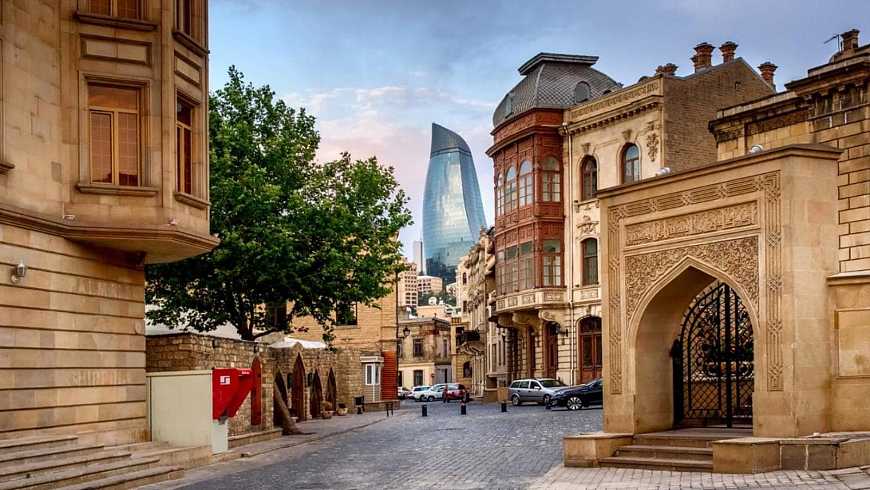
Every great city has a soul, and Baku’s beats loudest inside the ancient walls of İçərişəhər — a UNESCO World Heritage Site and one of the oldest continuously inhabited places in the Caucasus.
Step through the heavy stone gate and the 21st century quietly falls away. What replaces it is the sound of footsteps on worn cobblestones, the smell of saffron drifting from a restaurant kitchen, and the weight of centuries seeping from every wall. Medieval caravanserais that once housed Silk Road merchants now shelter carpet shops and tea houses. Narrow lanes twist and fold back on themselves in the logic of a city that predates street planning by a thousand years.
The Old City is compact — you can walk its entirety in two or three hours — but its density of history means you’ll want longer. Book a guided walk if you can; the stories behind the buildings are extraordinary.
🗝️ Local tip: Come before 9am. The lanes are quiet, the light is golden, and the cats that call İçərişəhər home will outnumber tourists two to one.
📍 Practical info:
- Entry to the walled city: Free
- City centre location, walkable from Baku Boulevard
- Official guided tours depart from the tourist information office inside the main gate
2. Stand Beneath the Maiden Tower
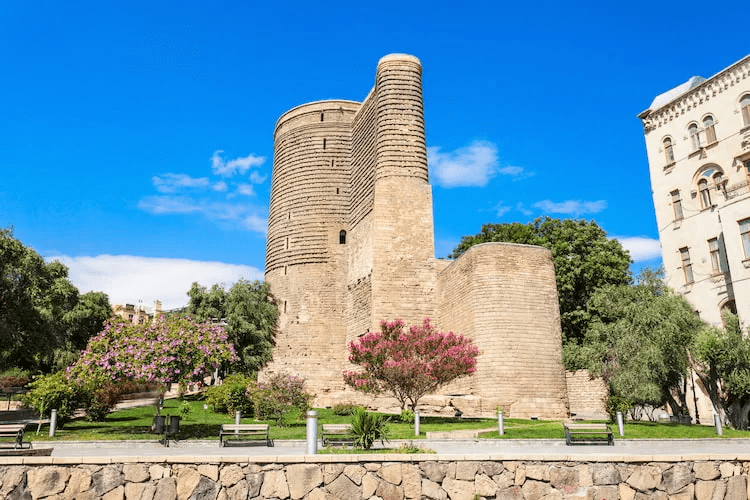
Rising from the heart of İçərişəhər, the Maiden Tower (Qız Qalası) is Baku’s most enduring symbol — and its most debated mystery. No one fully agrees on what it was originally built for. Watchtower? Zoroastrian fire temple? Astronomical observatory? The debate has been running for centuries.
What’s certain is that the eight-floor tower has witnessed more of Baku’s history than anything else standing. Climb its spiral interior — exhibits on each floor trace the city’s story from pre-history to the present — and emerge on the rooftop for a panoramic view that takes in the Old City, the Caspian Sea, and the blazing modern skyline simultaneously. It’s one of those views that makes you stop talking and just look.
💡 Pro tip: Return at night. The Maiden Tower is floodlit after dark, and the scene — warm stone glowing against the cool night sky, the sea shimmering below — makes for some of the best photography in Baku.
📍 Practical info:
- Entry: approx. 8 AZN (~$5 USD)
- Open daily, 10am–6pm (last entry 5:30pm)
- Located inside İçərişəhər — combine with your Old City walk
3. Watch the Flame Towers Come Alive
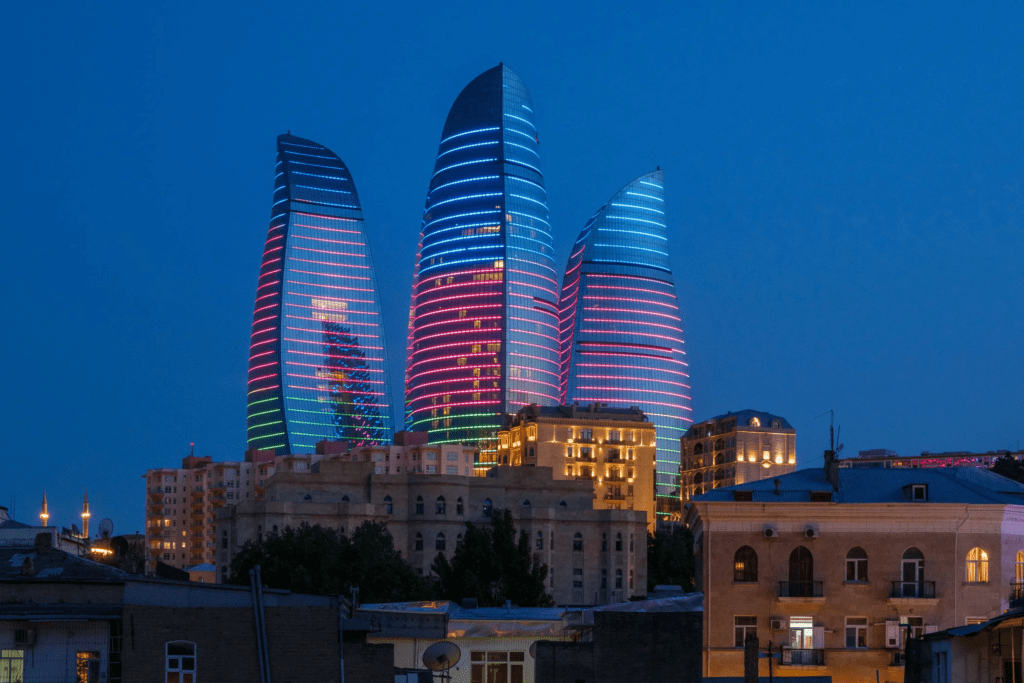
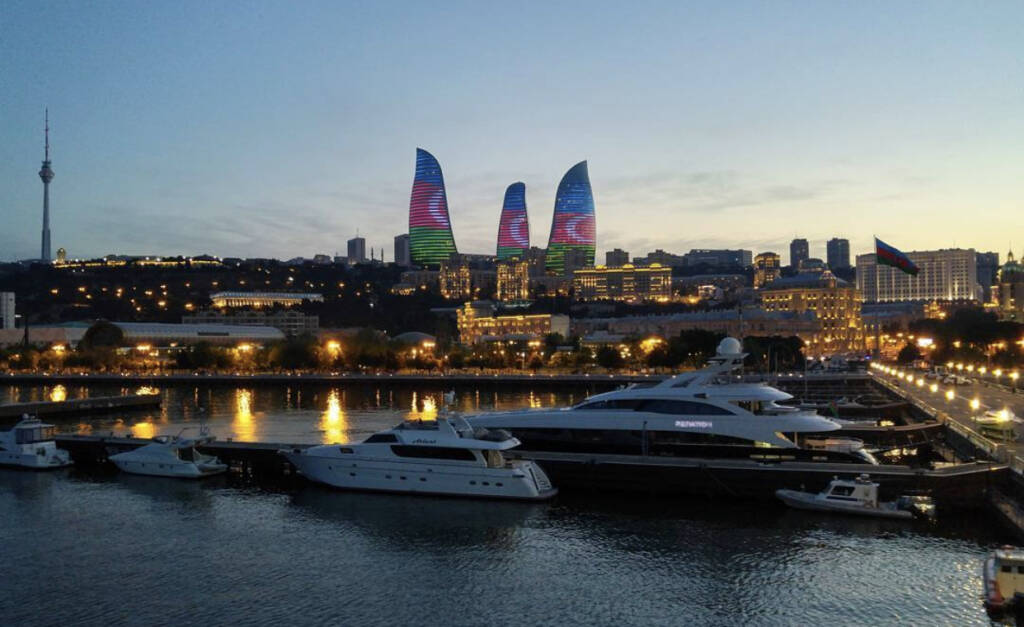
Three skyscrapers. 182, 165, and 160 metres tall. Sheathed in 10,000 individually programmable LED panels. After sunset, the Flame Towers — Baku’s most iconic modern landmark — transform into columns of digital fire that can be seen from 20 kilometres away.
The design is a deliberate homage to Azerbaijan’s identity as the Odlar Yurdu — the Land of Fire. For millennia, natural gas has seeped through the surface of the Absheron Peninsula, igniting spontaneously and burning for years. Ancient Zoroastrians travelled from Persia and India to worship these eternal flames. The Flame Towers are that history, rendered in glass and light.
Where to see them:
- Baku Boulevard: A wide-angle view from the promenade, with reflections in the Caspian Sea on calm evenings
- Highland Park (Dağüstü Park): The hilltop viewpoint — the definitive photograph
- From the Caspian Sea: The most breathtaking perspective of all — see item #11 below
📍 Practical info:
- The LED show runs nightly from dusk until around midnight
- Best photography: 30–45 minutes after sunset
- The towers contain residences, a hotel (Fairmont), and offices — not open to the public
4. Walk Baku Boulevard
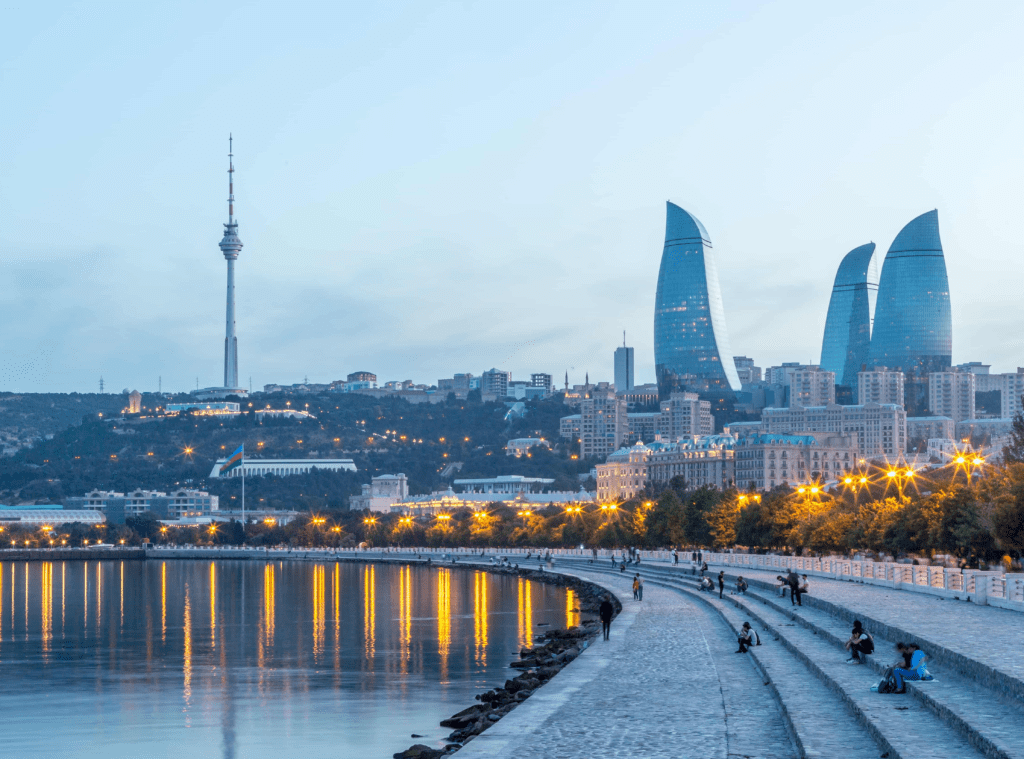
Baku Boulevard is the city’s living room — a 3.75 km seafront promenade of palm trees, fountains, cafés, and carefully tended gardens hugging the edge of the Caspian Sea. Opened in 1909 during the first oil boom, it has been expanded and reimagined many times since and is now one of the longest sea promenades in the world.
This is where Baku breathes. On warm evenings, the entire city seems to gather here: families with pushchairs, elderly men playing backgammon in pavilions, teenagers on rollerblades, couples sharing tea and pastries from one of the many çayxanas along the route. The pace is slow, the atmosphere is warm, and the views are excellent.
Don’t miss:
- The Baku Eye ferris wheel, which rises 60 metres above the boulevard
- The Carpet Museum building at the southern end — it looks like a rolled carpet and is extraordinary
- The boat pier near the Sea Station, where Caspian cruises depart throughout the day
📍 Practical info:
- Entry: Free
- Bike hire available at several points along the boulevard
- The boulevard runs roughly east–west; the Flame Towers are always visible to the south
5. Visit the Azerbaijan Carpet Museum
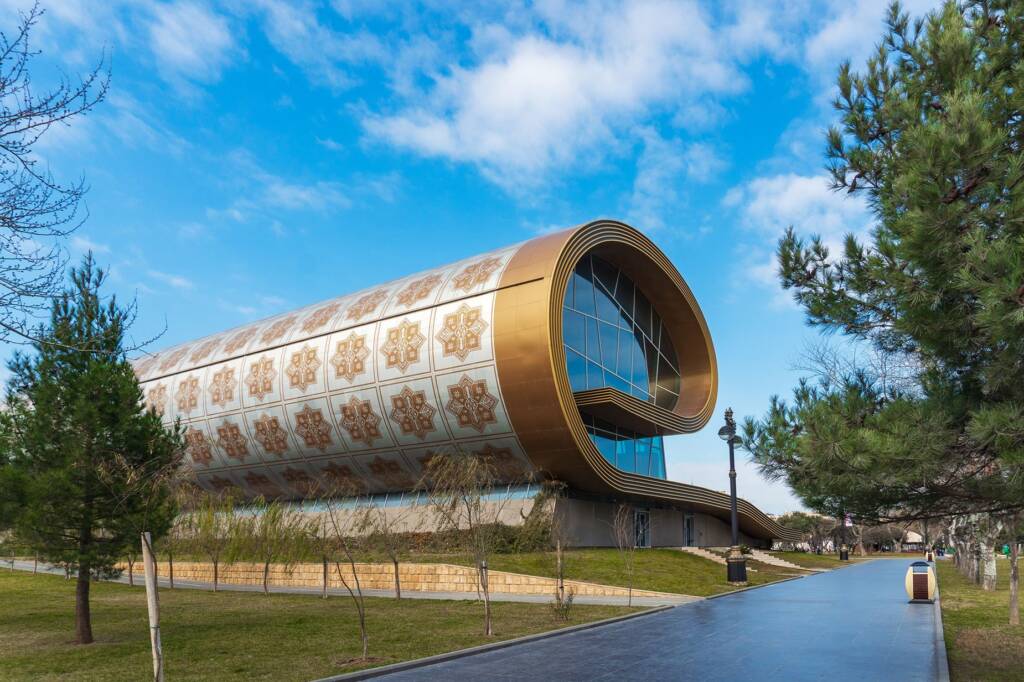
The building alone justifies the visit. Sitting at the southern end of Baku Boulevard on the Caspian waterfront, the Azerbaijan Carpet Museum is housed in a structure that looks precisely like an enormous rolled carpet — a design so perfect it almost seems too clever. Almost.
Inside, the world’s most comprehensive collection of Azerbaijani carpets unfolds across several floors: over 14,000 pieces spanning centuries, from ancient flat-weave kelim to intricately knotted palace carpets that took teams of weavers years to complete. These aren’t just decorative objects. Each carpet is a document — of trade routes, nomadic patterns, royal patronage, regional identity, and the intimate stories of the hands that made them.
The upper floors have floor-to-ceiling windows overlooking the Caspian Sea. It’s not a bad place to sit with a thought.
📍 Practical info:
- Entry: approx. 6 AZN (~$3.50 USD)
- Open Tuesday–Sunday, 10am–6pm
- Guided tours available in English, Russian, and Azerbaijani
6. Experience the Heydar Aliyev Center
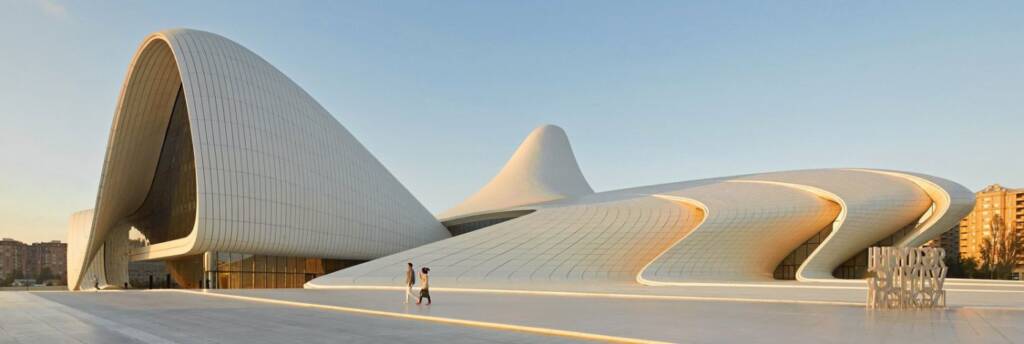
[IMAGE: heydar-aliyev-center-zaha-hadid.jpg] Alt text: The sweeping white curves of the Heydar Aliyev Center in Baku, designed by architect Zaha Hadid — a seamless flowing structure against a deep blue sky
In 2013, the Heydar Aliyev Center won the Design of the Year award from the London Design Museum. Looking at it, it’s not difficult to understand why.
Designed by the late Iraqi-British architect Zaha Hadid and opened in 2012, the building is a masterclass in the refusal of straight lines. Its surface flows without interruption — wall becomes roof becomes ground — in a single continuous movement that feels simultaneously natural and impossible. Hadid described wanting to free Azerbaijani architecture from the rigid Soviet aesthetic that had defined the 20th century. She achieved that, and then some.
Inside, the Centre hosts rotating exhibitions of Azerbaijani art, architecture, history, and culture. The permanent collection traces the country’s story with care and ambition. Outside, the undulating white landscape is a photographic destination in its own right.
💡 Best time to visit: Golden hour, when the white exterior turns warm amber and the building glows from within.
📍 Practical info:
- Entry: approx. 15 AZN (~$9 USD)
- Open Tuesday–Sunday, 11am–8pm
- Located 15 mins by taxi from the city centre; consider combining with nearby Upland Park
7. Watch the Earth Burn at Yanar Dağ
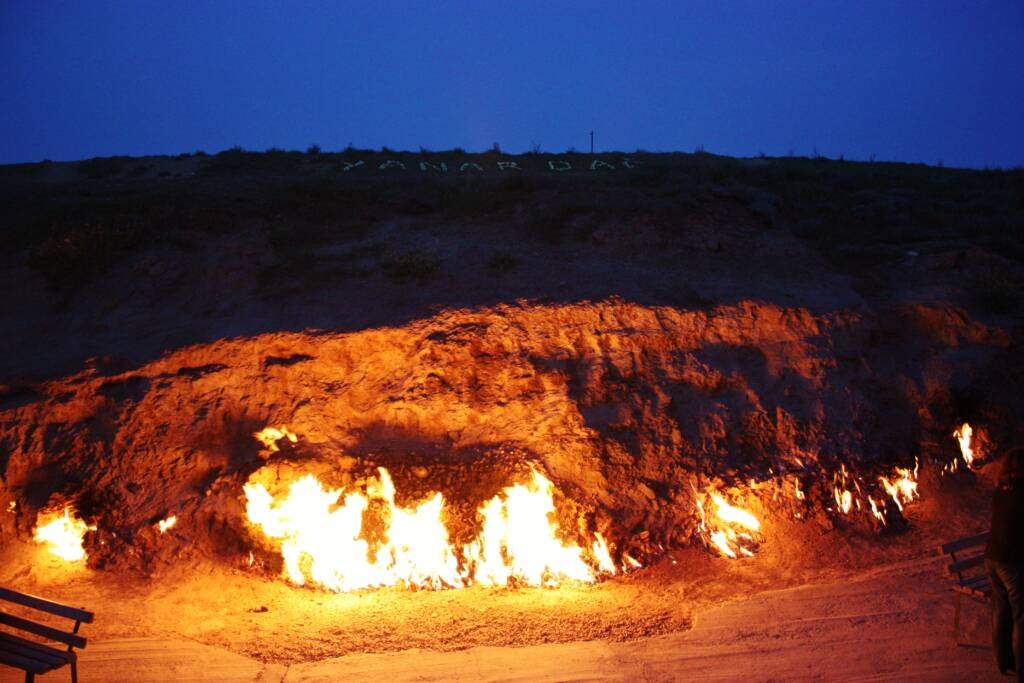
Twenty-five kilometres north of Baku, a hillside has been on fire for centuries. No one lit it. No one maintains it. It simply burns — day and night, year after year — because natural gas seeps continuously from the porous sandstone below and ignites as it meets the air.
Yanar Dağ — Fire Mountain — is not a tourist creation. Marco Polo reportedly described burning mountains in this region in the 13th century. Zoroastrian pilgrims came here from Persia and India for centuries to worship what they believed was a sacred flame. The fire is real, permanent, and genuinely spectacular — especially at dusk, when the flames leap three metres into the darkening sky.
Combine it with the nearby Ateshgah Fire Temple — a 17th-century Zoroastrian and Hindu temple built directly over a natural gas vent — for a half-day that gives you a genuinely different understanding of what “Land of Fire” actually means.
📍 Practical info:
- Entry: approx. 2 AZN (~$1.20 USD)
- Open daily, 9am–9pm
- 25 km from the city centre — best reached by taxi or as part of an organised day trip
→ [EXTERNAL BUTTON: Book a Yanar Dağ & Ateshgah Day Tour → Viator]
8. Discover Gobustan & the Mud Volcanoes
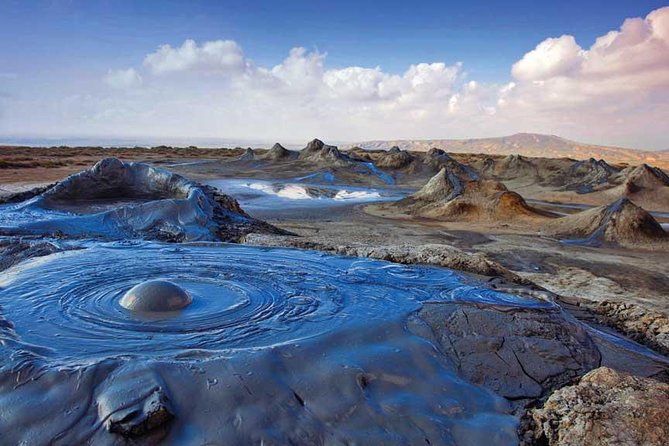
60 kilometres south of Baku, the landscape changes entirely. The city disappears, and in its place: a flat, dun-coloured plain studded with ancient rock and, further along the dirt road, something that looks like the surface of another planet.
Gobustan National Park protects more than 6,000 rock engravings (petroglyphs) carved into the hillsides of the Absheron Peninsula over 40,000 years — a gallery of ancient life that stretches from the Stone Age through to medieval times. The site’s museum provides excellent context; the rocks themselves are extraordinary.
But for many visitors, the real headline is just outside the park: Azerbaijan’s mud volcanoes. The country has approximately 400 of them — the highest concentration anywhere on Earth — and they are exactly as strange as they sound. Cold grey mud bubbles and burps from small cones in the middle of a desolate, cracked landscape. They are not dangerous. They are not hot. They are simply deeply, memorably weird.
📍 Practical info:
- Gobustan Museum: approx. 8 AZN entry
- Mud volcanoes: free to visit; a 4×4 vehicle or high-clearance car is strongly recommended
- Best combined with Yanar Dağ and Ateshgah as a full day trip from Baku
9. Stroll Nizami Street & Fountain Square
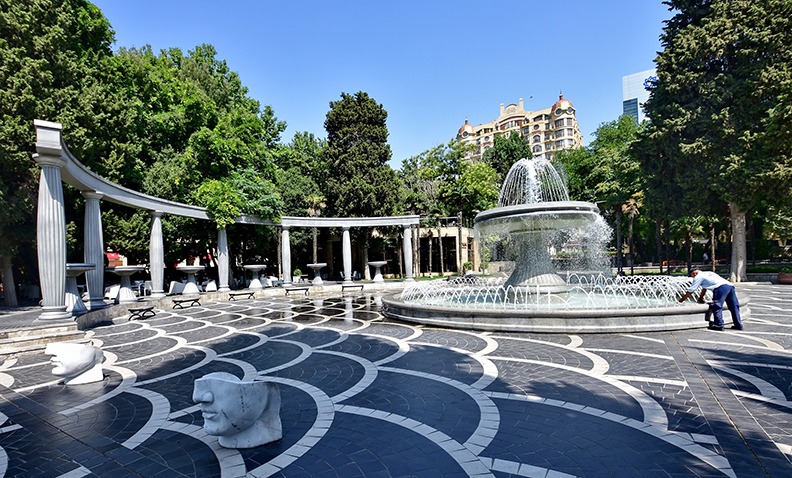
For a different register of Baku — prosperous, stylish, and deeply local — spend an afternoon on Nizami Street and the Fountain Square (Fəvvarələr Meydanı) that anchors it.
Baku’s main pedestrian boulevard runs through the heart of the city’s European quarter — a neighbourhood built during the first oil boom by Baku millionaires who hired architects from Warsaw, Paris, and Vienna to construct mansions that would rival anything in Europe. They succeeded. The buildings lining Nizami Street are genuinely beautiful: ornate stone facades, wrought-iron balconies, arched doorways that open into elegant courtyards.
Today those buildings house a mix of luxury boutiques, local jewellers, bookshops, and excellent bakeries. Fountain Square at the northern end is the city’s social hub — open piazza, playing fountains, outdoor cafés, and a constant, unhurried parade of Baku life.
🍽️ Eat and drink here:
- Çinar — Traditional Azerbaijani cuisine in a stunning historic setting (book ahead)
- Art Garden — Rooftop café above Fountain Square; excellent for people-watching
- Şirvanşah Museum Restaurant — Inside a restored 15th-century caravanserai in the Old City, just nearby
10. Climb to Highland Park at Sunset
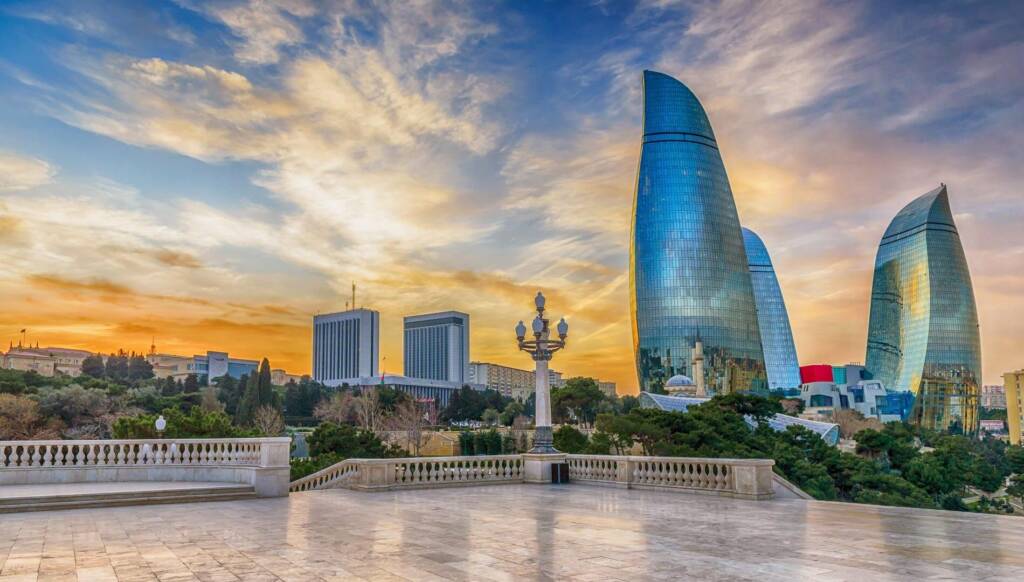
Take the funicular from Baku Boulevard — or walk the long stone steps if you have the energy — and Highland Park(Dağüstü Park) will reward you with the finest free view in Azerbaijan.
From this hilltop, the whole of Baku fans out below: the ancient walls of İçərişəhər to your left, the Flame Towers blazing to your right, the Caspian Sea pushing the horizon further than feels possible for a landlocked body of water. At sunset, the city turns gold and the Flame Towers begin their nightly performance. It’s the photograph that defines Baku — and not a single manat to take it.
The park itself is well-kept and peaceful — benches under pine trees, tea kiosks, an eternal flame burning at the hilltop memorial to Azerbaijan’s fallen. It’s a good place to breathe before descending back into the city’s energy.
📍 Practical info:
- Entry: Free
- Funicular: approx. 1 AZN each way, operating 10am–10pm
- Best visited 1 hour before sunset; the light is extraordinary
THE ONE EXPERIENCE YOU CAN’T MISS: A Private Yacht Tour on the Caspian Sea
We’ve arrived at the experience that separates people who visited Baku from people who truly felt it.
The Caspian Sea is not scenery in Baku. It is the city’s reason for being. Oil derricks first broke its surface here in the 1840s, unleashing the wealth that built those French-style mansions on Nizami Street. Its winds shaped the architecture — buildings angled to deflect the lashing gusts, streets oriented to channel the breeze. Its waves carried the Persian and Mongol armies that swept through these shores across the centuries. The Caspian is not a backdrop. It’s the main character.
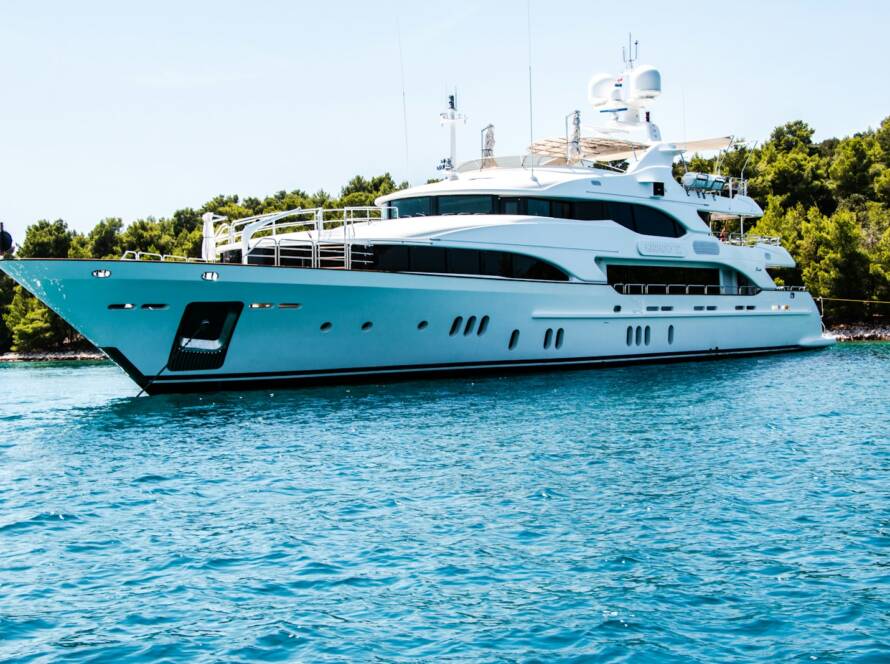
And the best way to understand Baku — to truly see it whole — is to step onto a yacht and watch it from the water.
What happens when you’re on the water
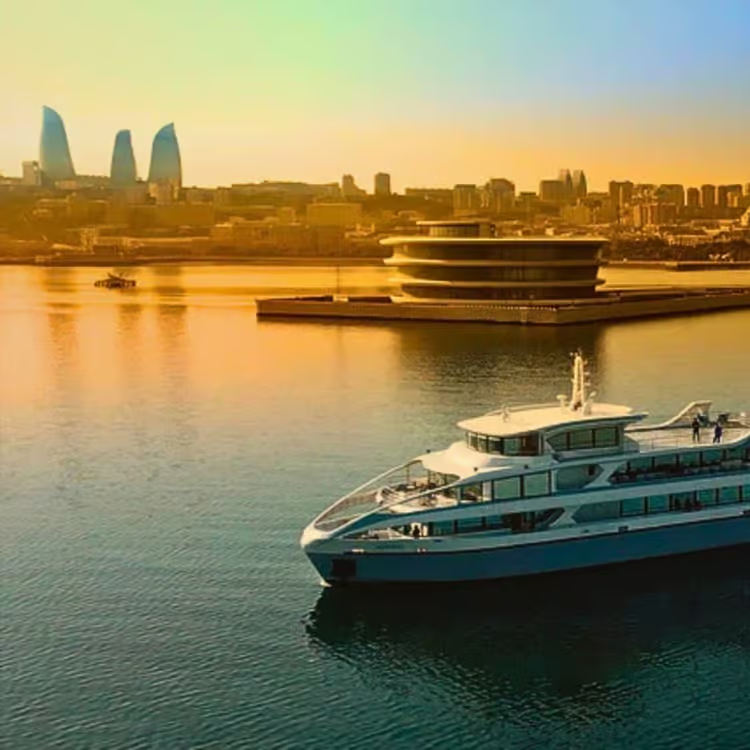
As the yacht pulls away from the boulevard and the city begins to rearrange itself behind you, something shifts. The Maiden Tower — which seemed modest among the tight lanes of the Old City — reveals its true scale against the open sky. The Carpet Museum unfurls along the waterfront in a way you couldn’t appreciate from the street. The Flame Towers, glimpsed between buildings all day, suddenly command the entire horizon.
And when the sun drops and the LED panels on those three skyscrapers ignite — their reflections stretching across the dark water, the city’s lights multiplying in the Caspian’s surface — you’ll understand why guests who do this tour always say the same thing:
“That was the best part of my trip.”
What’s included on a Baku Caspian yacht tour
- Departure point: Pier near Baku Seaside Boulevard
- Duration: Choose from a 2-hour sunset cruise to a full-day sea voyage
- Views en route: Flame Towers, Crystal Hall, Maiden Tower, Carpet Museum, Baku Eye, Flag Square — all from the water
- On deck: Open air, sea breeze, drinks served, music on request
- Options: Romantic couples’ cruise · Family day trip · Private group charter · Special occasion booking · Corporate event
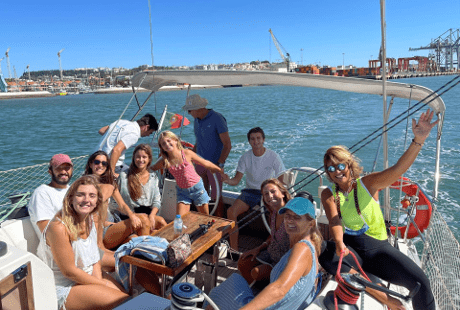
Whether you want to watch the sun go down over the Flame Towers with a glass in hand, anchor in a quiet bay for a swim in the Caspian, or celebrate a birthday with your group on a private charter — this is the Baku experience that every other experience in the city has been building toward.
“We saw the city from every angle during our trip, but nothing compared to the view from the water at night. The Flame Towers reflecting in the Caspian, the whole skyline glowing — it was surreal.” — Guest review
Book Your Caspian Yacht Experience
BakuYachts.com offers private and group yacht tours departing from Baku Boulevard. Sunset and evening departures are our most popular — book in advance, especially in peak season (May–June and September–October).
Private charters, romantic evenings, family days, special occasions — we cater to all.
Baku Travel Tips
| Category | Info |
|---|---|
| Currency | Azerbaijani Manat (AZN). 1 USD ≈ 1.70 AZN (2026) |
| Language | Azerbaijani (official); Russian widely spoken; English in tourist areas |
| Best months | April–June and September–November |
| Avoid | July–August (intense heat, strong winds) |
| Getting around | Bolt app and local taxis are cheap and reliable; Metro covers key areas |
| Tipping | 10% in restaurants is appreciated |
| Safety | One of the safest capitals in the region — solo travel is comfortable |
| Connectivity | Buy a SIM at the airport (Azercell or Bakcell); data is fast and cheap |
| Dress code | Smart casual in the city; cover shoulders/knees at mosques and temples |
FAQ: Things to Do in Baku
How many days do you need in Baku?
Three full days is the minimum we’d recommend for a first-time visitor — enough for the city highlights and a day trip to Gobustan or Yanar Dağ. If you want to do justice to the Absheron Peninsula and have time to slow down (which you should), plan for four or five.
Is Baku expensive?
No — and this surprises most visitors. Compared to Istanbul, Dubai, or any Western European capital, Baku offers remarkable value. Budget travellers manage comfortably on $40–60/day; mid-range travellers on $80–130. Luxury options exist and are good, but priced far below equivalent quality elsewhere in the region.
Is Azerbaijan safe to visit?
Yes. Baku is consistently rated one of the safest cities in the South Caucasus. Violent crime against tourists is very rare; petty theft is uncommon. Solo travellers — including solo women — generally report feeling comfortable.
Do I need a visa for Azerbaijan?
Most nationalities do. The Azerbaijan e-Visa is simple to apply for online and takes approximately 3 business days to process. Cost is around $26 USD. Citizens of some countries (Georgia, Russia, and others) are exempt — check the official portal for your nationality. → evisa.gov.az
What is the weather like in Baku?
Baku sits in a semi-arid climate and is famously windy — it translates roughly as “City of Winds.” Spring (April–May) and autumn (September–October) are the best seasons: warm but not hot, with manageable wind. Summer reaches 35–40°C and can feel brutal on the open boulevard. Winter is cold (around 5°C) but has low tourism and low prices.
Can you swim in the Caspian Sea?
Yes — though the central city beaches are not the best for swimming. The cleaner Caspian beaches are along the Absheron Peninsula, north and south of Baku. Many visitors enjoy a Caspian swim as part of a yacht tour, where the captain anchors in cleaner, quieter water away from the city harbour.
Is a yacht tour worth it in Baku?
It’s one of the most consistent highlights guests mention in their reviews, and one of the most underbooked experiences in the city. The view of Baku from the Caspian — especially at sunset or after dark, when the Flame Towers are fully illuminated — is genuinely spectacular and unlike anything you can see from land.
What’s the food like in Baku?
Azerbaijani cuisine is one of the great undiscovered culinary traditions. Don’t leave without eating: plov (saffron rice with lamb, dried fruits, and chestnuts); dolma (grape leaves stuffed with spiced lamb and rice); dushbara (tiny dumplings in saffron broth); kutab (thin flatbreads stuffed with greens or meat); and for dessert, pakhlava and shekerbura — pastries that are traditionally made for the Nowruz spring festival but available year-round in good bakeries.
How do I get from the airport to the city?
Heydar Aliyev International Airport is 30 km from the centre. The fastest and easiest option is a private taxi or Bolt (approx. 25–40 AZN, 30–45 minutes). Public bus H1 runs to the city but is crowded and has no luggage space. Pre-booking a private transfer is recommended for groups.